Food Beverage
Citric Acid Grades: Food, Pharma & Cleaning Uses
How citric acid grades and forms differ across food, pharma and cleaning—and how to specify anhydrous vs monohydrate and FCC vs technical when you order.

By Berstin Technical Desk · Sourcing & Technical Specialists
· 4 min read
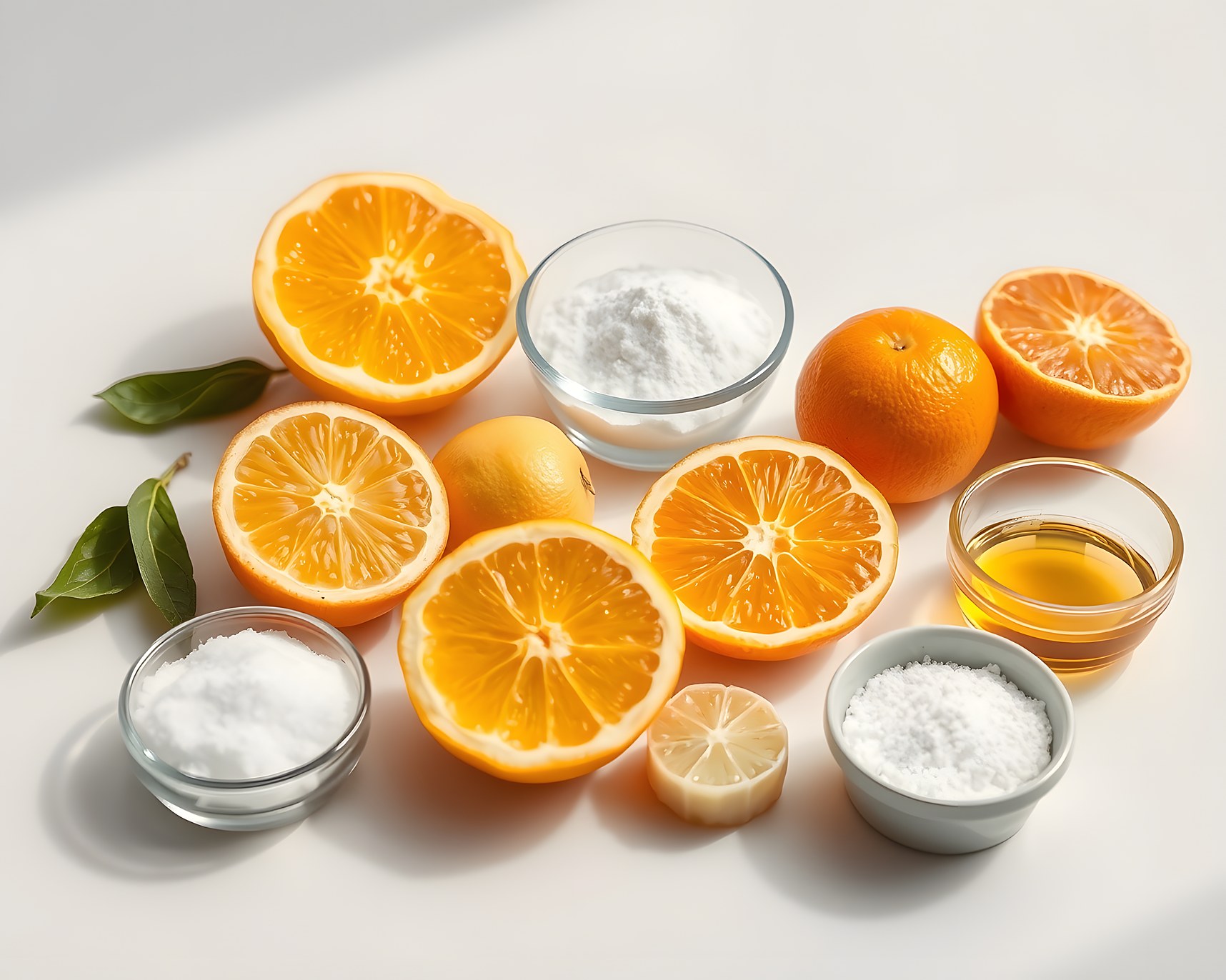
“Citric acid” names a single molecule, but it reaches your dock as several different products. The choice between them is rarely about which is “purer”—it is about which form, grade and standard your application and your auditors require. Treat all citric acid as interchangeable and you either over-pay for pharmaceutical documentation you do not need, or under-specify and fail an inbound check.
What are the grades of citric acid?
Citric acid is supplied in two physical forms—anhydrous and monohydrate—and across food, pharmaceutical and technical grades that differ chiefly in documentation and impurity limits rather than in the molecule itself. The grade you specify should be driven by your application and compliance needs, not by purity alone. In practice the decision has three layers: pick the form, pick the grade, then confirm the standard and any Halal/Kosher requirement against current documentation.
The three grade tiers map cleanly onto end-use:
- Food grade — manufactured and documented to a food compendium such as the Food Chemicals Codex (FCC). In the EU this is the food additive E330, declared on labels by name or E-number under Regulation (EC) No 1333/2008.
- Pharmaceutical grade — supplied to a pharmacopoeial monograph (BP, USP or EP), which adds the analytical testing and traceability that regulated drug manufacturing requires.
- Technical grade — the same acid with looser impurity controls, used for cleaning, descaling and industrial chelation.
| Tier | Common form | Key standard | Typical use |
|---|---|---|---|
| Food grade | Anhydrous granular / Monohydrate | FCC · E330 | Food & beverage acidulant |
| Pharmaceutical grade | Anhydrous / Monohydrate | BP · USP · EP | Regulated pharmaceutical manufacturing |
| Technical grade | Anhydrous / Monohydrate | Technical spec | Cleaning & industrial chelation |
Directional sourcing guide. Form availability, exact impurity limits and regional regulatory status vary by manufacturer—confirm against the current TDS, SDS and CoA for the grade you are sourcing.
Anhydrous vs monohydrate citric acid — which do you need?
Anhydrous and monohydrate citric acid are the same active acid; the difference is water of crystallisation. Anhydrous citric acid carries none, so it is preferred where moisture must be minimised—dry beverage powders, effervescent blends and other moisture-sensitive systems. Monohydrate incorporates one water molecule per acid molecule and is a common general-purpose form, often handled well in liquid and standard dry applications.
Two practical consequences follow. First, because the water content differs, the acid contribution per kilogram differs, so a like-for-like swap changes your dosing basis—recalculate against the supplied grade’s assay. Second, the two forms can behave differently in moisture-sensitive blends and during storage. Treat form as a specification line, not an afterthought, and confirm handling guidance against the current technical data sheet.
Food grade vs technical grade citric acid: what’s the difference?
The difference between food-grade and technical-grade citric acid is documentation and impurity control, not a different chemical. Food-grade citric acid is made and tested to a food compendium such as the FCC—a compendium of internationally recognised standards for the identity, purity and quality of food ingredients—and in the EU is the authorised additive E330. Technical-grade citric acid is the same acid with looser controls and lighter paperwork, intended for cleaning and industrial duty rather than food or drug contact.
Two notes for buyers. Food additives such as E330 are authorised and listed in the EU food additives database, and long-authorised additives are being re-assessed under the EU’s re-evaluation programme—so regulatory status is a live attribute to confirm for your market, not a fixed assumption. And an E-number identifies the additive; it does not, on its own, define a form or guarantee a particular purity. Always read the grade’s specification.
What is citric acid used for across industries?
Citric acid works as an acidulant, a pH buffer and a chelating (sequestering) agent, which is why the same molecule spans food, pharmaceutical and cleaning supply chains. In food and beverage it adjusts pH and provides tartness as E330. In pharmaceutical manufacturing it acts as an acidifier and buffer, supplied to BP, USP or EP monographs. In cleaning and industrial use, its chelating ability makes it a descaler and a sequestrant for metal ions—roles where technical grade is sufficient.
It rarely travels alone. Buffer systems frequently pair citric acid with its salt, sodium citrate (E331(iii)), to hold a target pH, and acidulant blends may combine it with other organic acids such as lactic acid (E270). The table below positions the three.
| Material | EU additive no. | Typical sourcing role | Common grades |
|---|---|---|---|
| Citric acid | E330 | Acidulant, buffer, chelant | Anhydrous / Monohydrate; FCC, BP/USP/EP |
| Sodium citrate | E331(iii) | Buffer salt, paired with citric acid for pH control | Anhydrous / Dihydrate; FCC, BP/USP |
| Lactic acid | E270 | Liquid acidulant, pH adjustment | 80% / 88% / 90%; FCC, USP |
Catalogue reference. Confirm exact specification, form and regional regulatory status against the current TDS/SDS/CoA for each material and grade.
You can compare these acidulants and their salts on the citric acid material page and across the Berstin product portfolio.
How to specify citric acid when ordering
A clean specification removes the back-and-forth and prevents inbound rejections. When you raise an enquiry or purchase order, state:
- Application — food/beverage, pharmaceutical, cosmetic, or cleaning/industrial. This sets the grade tier.
- Grade and standard — FCC / E330, BP / USP / EP, or technical.
- Form — anhydrous (fine granular) or monohydrate, with any particle-size preference.
- Certifications — Halal and Kosher are available; flag them up front.
- Volume, destination and documentation — so lead time, origin and the CoA/SDS package match your audit requirements.
Berstin supplies citric acid in anhydrous fine-granular and monohydrate forms, in food (FCC, E330) and BP/USP/EP grades, with Halal and Kosher available and origins in China and the EU (HS code 2918.14). As an independent distributor, we are not tied to one producer—we match the right grade from the right manufacturer to your brief, with the documentation your market requires.
Tell us your application, form, grade and destination. We typically respond within one business day with technical data, lead times and indicative pricing.
Frequently asked questions
What is the difference between food grade and technical grade citric acid?
What is the difference between citric acid monohydrate and anhydrous?
What is E330?
Which citric acid grade should I order?
Materials referenced
Materials covered in this article — talk to us for grades, specs and availability.
Home Care
Citric Acid
Home Care
Sodium Citrate
Pharmaceutical
Lactic Acid
Sources
Related articles

SLES vs SLS vs CAPB: Choosing the Right Surfactant
How SLES, SLS and cocamidopropyl betaine differ on mildness, foam and cost — and how formulators pair a primary and a secondary surfactant in real products.
APG: The Natural, Biodegradable Surfactant
What alkyl polyglucosides are, why they read as natural and biodegradable, and how decyl, lauryl and coco glucoside differ for formulators and buyers.

Glycerine Grades: USP vs Technical Explained
Technical, food-grade E422 and USP/EP pharmaceutical glycerine share one molecule but differ in purity, impurity limits and paperwork — here is how to pick and specify the right tier.